Source Powertrain Assembly and Adjustment Training Platform for Schools, Workshops, Centers
Find 29 Powertrain Assembly and Adjustment Training Platform units from verified Chinese manufacturers. Compare specifications, certifications, and pricing for technical schools, training centers, and workshops to select the right equipment for automotive electrical system teaching.
Key considerations
Products List
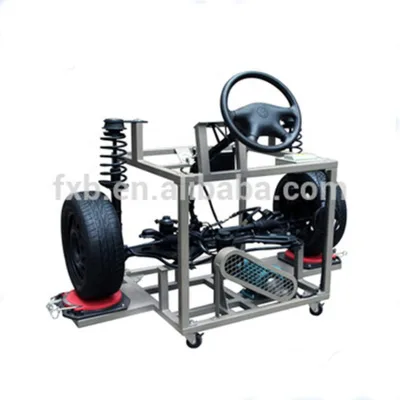
Power Steering & Independent Suspension System Training Equipment .
$2442.73 - $3664.10
MOQ: 1 Minimum


Gasoline Engine Disassembly and Assembly Educational Training Platform
$1750.00 - $2750.00
MOQ: 1 Pieces


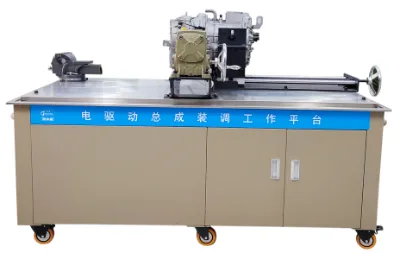
Electric Vehicles Power and Control System Integrated Teaching Training Platform
$1000.00 - $3000.00
MOQ: 1 Pieces


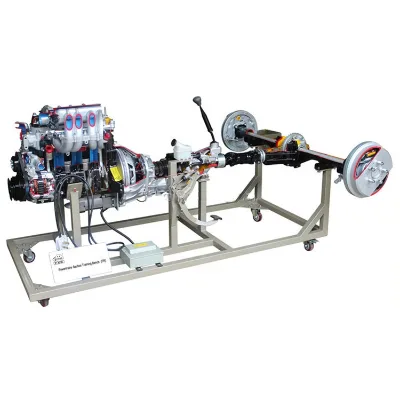
Equipment Equipment Auto Transmission Disassembly and Flip Training Platform
$1235.00 - $1680.00
MOQ: 1 Pieces


Comprehensive Sourcing Guide
Powertrain Assembly and Adjustment Training Platform Sourcing Guide
Sourcing a Powertrain Assembly and Adjustment Training Platform requires a careful balance between educational fidelity and industrial durability. These systems are designed to replicate real-world automotive or mechanical systems, allowing students and technicians to practice disassembly, inspection, and reassembly without the risk of damaging expensive production units. The procurement process must prioritize platforms that offer clear visibility into internal components while maintaining structural integrity under repeated handling. Buyers should focus on platforms that explicitly support both demonstration and active training, ensuring the equipment serves dual purposes in classroom instruction and hands-on workshop environments.
The market for these training aids is diverse, with suppliers offering various configurations tailored to specific technical schools, training centers, and workshops. Observations from current listings indicate a wide range of models, from compact units suitable for basic electrical system teaching to larger assemblies designed for complex powertrain diagnostics. Procurement teams must navigate this variety by defining precise learning objectives before evaluating suppliers. Whether the goal is to teach fundamental automotive electrical systems or advanced electric vehicle power assemblies, the selected platform must align with the curriculum’s technical depth and the physical constraints of the training facility.
Product Scope and Observed Listing Signals
Current market observations reveal a significant variation in product specifications, reflecting the specialized nature of training equipment. Listings show models such as the ZC-QCB45A, ZC-QCB35B, and GZSX-G007, each with distinct dimensions and material compositions. For instance, some platforms are constructed from steel to provide robustness for heavy-duty mechanical training, while others utilize 4mm aluminum plastic plates or pure aluminum for lighter, corrosion-resistant applications. The observed standard dimensions range from compact units measuring approximately 800x650x1100mm to larger assemblies reaching 2000x1050x1250mm. Buyers must verify that the physical footprint of the chosen platform fits within their available workshop space and allows for safe student movement around the unit.
Pricing and minimum order quantities (MOQ) also vary considerably across the observed data. Prices for these training platforms have been observed in the range of $650 to $7,890 USD, depending on the complexity of the assembly and the level of customization required. The MOQ for many suppliers is set at just one set, which is advantageous for individual institutions looking to pilot a new training program without committing to bulk purchases. However, buyers should be aware that customization options, such as OEM branding or specific language support, may influence the final cost and lead time. Understanding these commercial signals helps in budgeting accurately and negotiating terms that align with institutional procurement cycles.
Technical Specifications to Verify
When evaluating technical specifications, the primary focus should be on the material composition and structural design of the training platform. The material choice directly impacts the longevity and maintenance requirements of the equipment. Steel-based platforms offer superior durability for heavy mechanical tasks, whereas aluminum or aluminum-plastic constructions may be preferred for environments where weight reduction or corrosion resistance is critical. Buyers must verify the thickness and quality of these materials to ensure they can withstand the rigors of daily student use. Additionally, the packing method, often described as wooden boxes or wooden cartons, should be assessed to ensure the equipment arrives without damage, as improper packaging can lead to costly repairs or delays.
Dimensional accuracy and model-specific features are equally important for effective training. Each model, such as the ZC-QCA12A or GZSX-BYD013, comes with specific standard dimensions that dictate its application scope. For example, a platform designed for automotive electrical system teaching may require different spatial arrangements than one intended for electric vehicle power assembly training. Buyers should cross-reference the listed dimensions with their curriculum requirements to ensure the platform provides adequate access to all necessary components. Furthermore, the availability of customization, including OEM capabilities and language support, should be confirmed to ensure the platform can be tailored to specific institutional needs or regional language requirements.
Compliance and Safety Documentation
Compliance with international standards is a non-negotiable aspect of sourcing training equipment. Many observed listings highlight certifications such as CCC, CE, and ISO, which indicate adherence to specific safety and quality benchmarks. Buyers must request and verify these certification documents to ensure the equipment meets the regulatory requirements of their operating region. The CE mark, for instance, is crucial for products sold or used in the European market, while CCC certification is relevant for the Chinese market. Understanding the specific certification status of each model helps in avoiding legal complications and ensures that the training platform is safe for student interaction.
Safety features and condition reports are also critical components of the documentation package. Listings often specify that the condition of the equipment is "New," which implies that the platform is free from wear and tear that could pose safety risks. However, buyers should also inquire about the safety mechanisms integrated into the design, such as secure mounting points, insulated electrical connections, and protective covers for moving parts. Additionally, the warranty terms, typically observed as a one-year warranty, should be clearly understood. This warranty should cover both structural defects and functional failures, providing a safety net for the institution in case of early equipment issues.
Cost Drivers and Commercial Terms
The cost of a powertrain assembly training platform is influenced by several key factors, including the complexity of the internal assembly, the materials used, and the level of customization. Platforms that replicate complex systems, such as electric vehicle power assemblies, tend to be more expensive due to the intricate components and higher manufacturing precision required. Similarly, customizations such as OEM branding or specific language support can add to the overall cost. Buyers should request detailed breakdowns of these costs to understand where their investment is going and to identify potential areas for cost savings without compromising educational value.
Commercial terms, including packaging, shipping, and after-sales support, also play a significant role in the total cost of ownership. The use of wooden boxes or cartons for packaging is standard, but buyers should verify if these costs are included in the quoted price. Additionally, the availability of training platforms for beginners to advanced users can impact the long-term value of the purchase. A platform that supports a wide range of skill levels may justify a higher initial investment by extending its utility across multiple courses. Buyers should also consider the availability of spare parts and technical support, as these factors can reduce long-term maintenance costs and ensure continuous operation of the training equipment.
Supplier Qualification and Quality Control
Supplier qualification is a critical step in ensuring the reliability of the training platform. Buyers should verify the supplier’s origin, with many observed listings indicating production in China, and assess their manufacturing capabilities. It is essential to confirm that the supplier has a proven track record in producing educational equipment and can provide references from other technical schools or training centers. Additionally, buyers should inquire about the supplier’s quality control processes, including how they inspect materials and assemble the platforms. A robust quality control system ensures that each unit meets the specified standards and is free from defects before shipment.
Language support and customization capabilities are also indicators of a supplier’s professionalism and flexibility. Suppliers that offer English and other language support demonstrate a commitment to serving a global market and can better assist international buyers. Similarly, the ability to provide OEM customization allows institutions to brand the equipment according to their identity, enhancing the professional appearance of their training facilities. Buyers should evaluate these capabilities during the supplier selection process to ensure that the chosen partner can meet their specific operational and branding needs. Clear communication channels and responsive customer service are also vital for addressing any issues that may arise during the procurement or installation phases.
Long-Term Procurement Checks
Long-term procurement success depends on the durability and adaptability of the training platform. Buyers should consider the warranty period and the supplier’s policy for repairs and replacements. A one-year warranty is common, but buyers should explore options for extended warranty coverage to protect their investment over time. Additionally, the availability of spare parts and technical documentation is crucial for maintaining the platform’s functionality. Suppliers that provide comprehensive manuals and readily available components can significantly reduce downtime and maintenance costs, ensuring that the training program remains uninterrupted.
Finally, buyers should plan for future scalability and curriculum updates. As automotive and mechanical technologies evolve, the training platforms must be able to accommodate new systems and techniques. Suppliers that offer modular designs or upgrade options can provide greater flexibility, allowing institutions to adapt their training programs without replacing entire platforms. By considering these long-term factors, buyers can make informed decisions that support the ongoing educational goals of their institutions. Regular reviews of the platform’s performance and student feedback can also help identify areas for improvement or additional training resources, ensuring that the investment continues to deliver value over its lifespan.
FAQs
What certifications do the training platforms have?
The training platforms carry CCC, CE, and ISO certifications. These standards ensure the equipment meets safety and quality requirements for use in technical schools and training centers.
Can the equipment be customized for specific needs?
Yes, customization is available including OEM options and language support. Buyers can request specific dimensions or features to match their workshop or educational facility requirements.
What is the warranty period for these units?
Each unit comes with a standard one-year warranty. This coverage applies to the new condition equipment used for demonstration and teaching purposes in automotive or electrical systems.
Which materials are used to construct the platforms?
The platforms are constructed from steel and aluminum materials. Some specific models utilize 4mm aluminum plastic plates to ensure durability during heavy training and demonstration activities.
What are the standard dimensions for the equipment?
Standard dimensions vary by model, ranging from 800x650x1100mm to 2000x1050x1250mm. Specific models like ZC-QCB45A and GZSX-G007 have defined sizes suitable for different training spaces.
Where are these training platforms manufactured?
These training platforms are manufactured in China. The origin is clearly stated for all listed models, ensuring transparency regarding the production source for international buyers.
What is the minimum order quantity for purchase?
The minimum order quantity is one set for most models. This low MOQ allows technical schools and workshops to purchase single units for immediate demonstration and training use.